
A complete employee medical check-up (MCU) report has nine sections, from the participant's identity to the examining doctor's signature. Different people fill in each section, from the registration officer and the participant to the laboratory and the examining doctor.
The layout in this article follows the Worker Health Examination Form of the Indonesian Association of Occupational Health Doctors (IDKI). The form serves as an example layout, not a mandatory format. The example for each section comes from one invented report with made-up data, and this article does not explain what any result means.
Sections of an employee MCU report
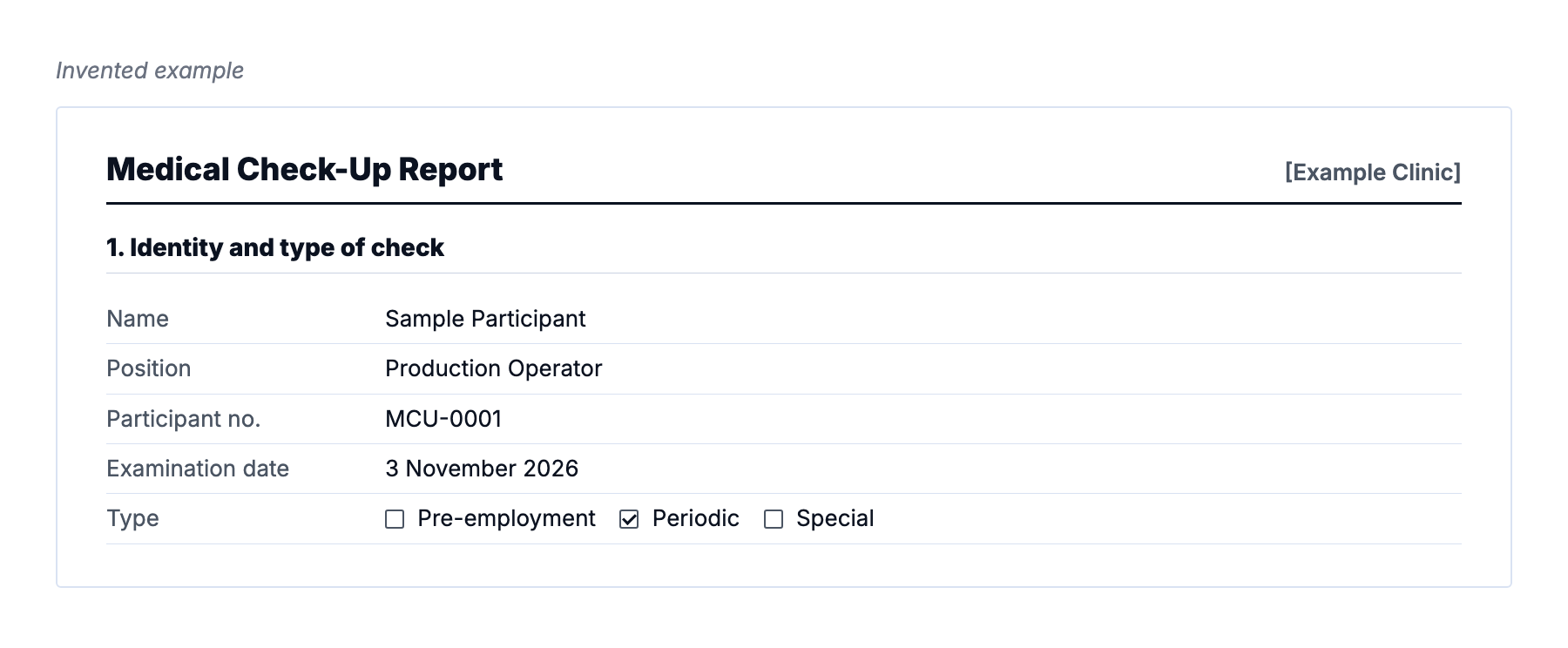
1. Identity and type of check
The identity section holds the name, position, employee or participant number, and examination date. The type of check follows Article 1 of Manpower Ministry Regulation 02/1980: pre-employment, periodic or special. The registration officer fills it in, and the IDKI form repeats the identity on every examination page.
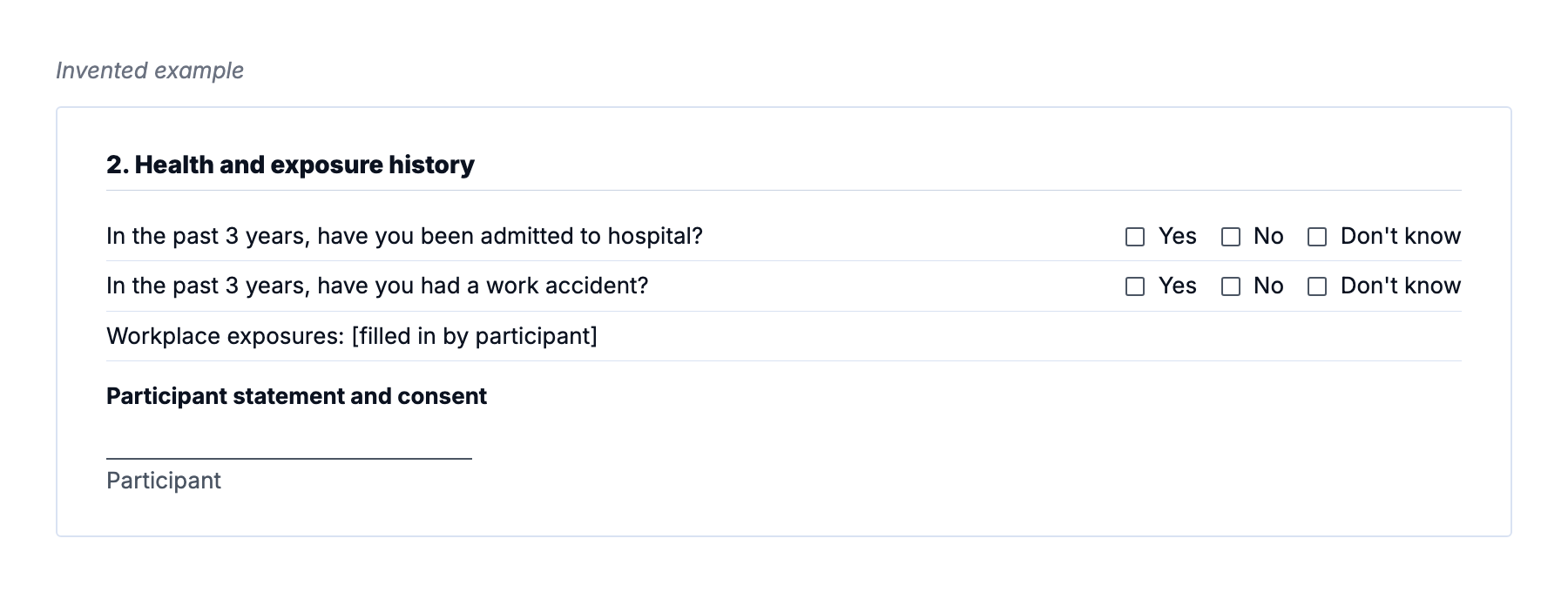
2. Health and exposure history
The participant fills in personal and family health history, vaccination history, and exposure history, meaning workplace factors that can affect health. The participant then signs a statement and consent. For how to word the questions, see employee health history questionnaires.
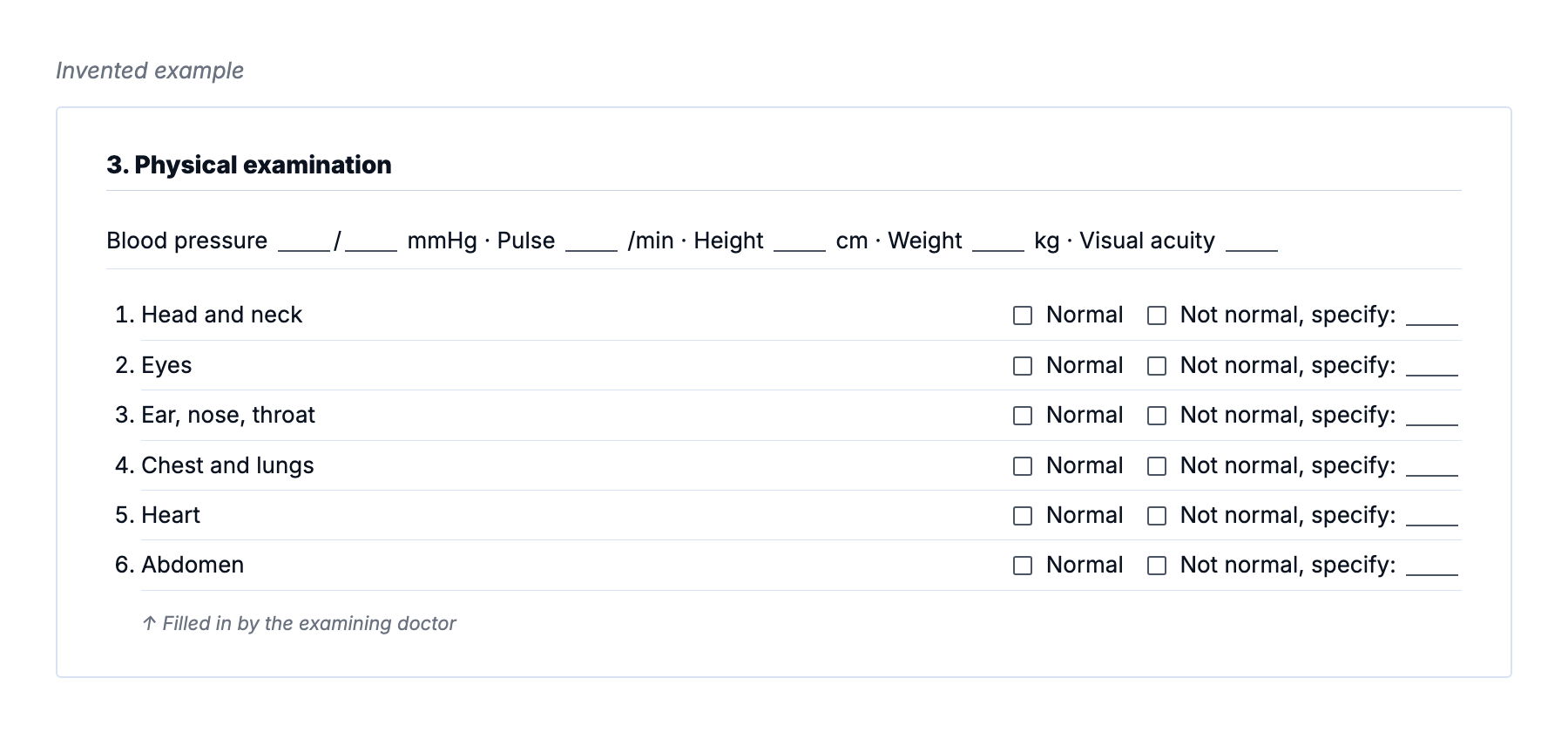
3. Physical examination
The IDKI form opens this section with basic measurements, such as blood pressure, pulse, height and weight, and visual acuity. Health staff can take these measurements, following the division of roles set by the examining doctor. The examining doctor then records findings system by system. Each numbered item uses the options "normal" or "not normal, specify". The findings fall to the doctor, so the example below shows only the layout.
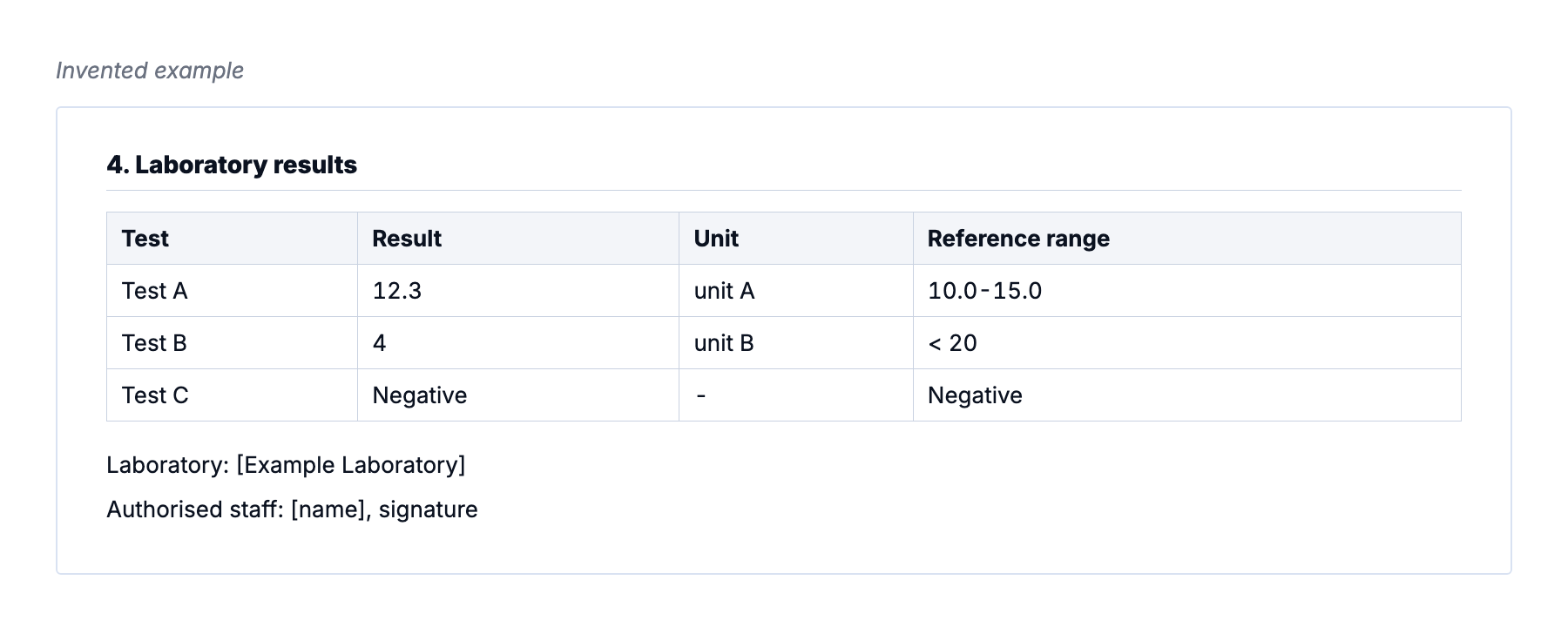
4. Laboratory results
Laboratory results come from the testing laboratory, with the units and reference ranges that laboratory uses. Health Ministry Regulation 43/2013 asks laboratory reports to include the identification and signature of authorised staff. A result outside the reference range does not necessarily mean illness, as the article what a reference range is explains. For the criteria of this section, see 8 criteria for good laboratory results.
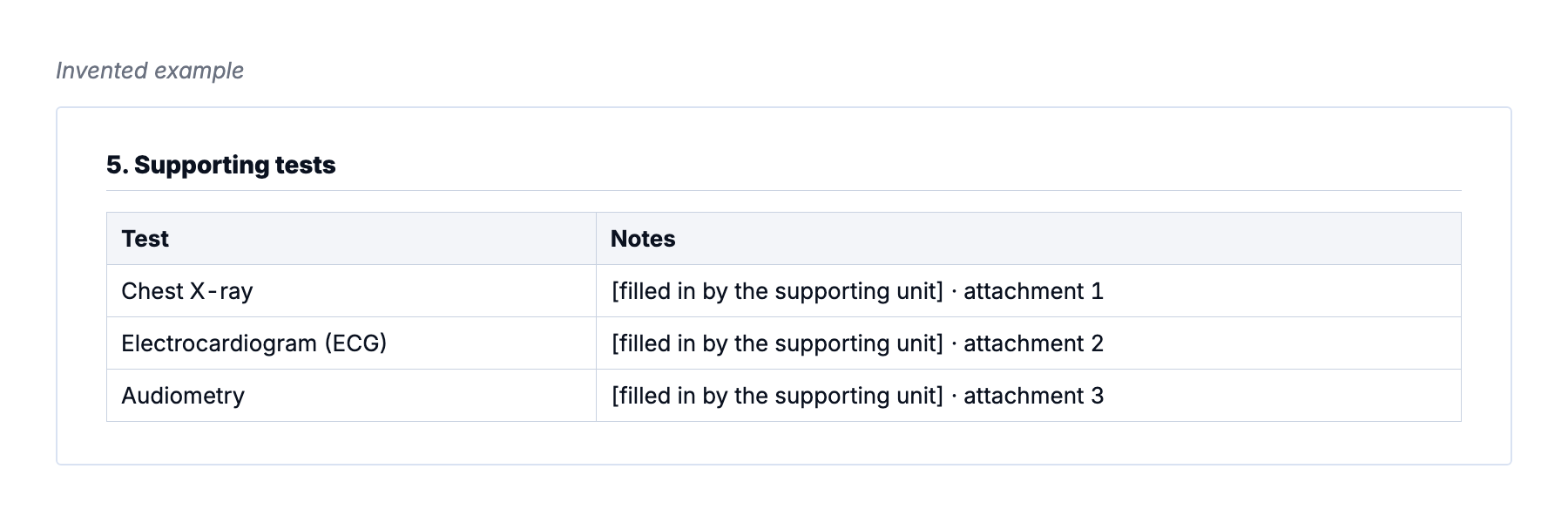
5. Supporting tests
Supporting tests are additional tests beyond the physical examination and the laboratory. Examples include X-ray, electrocardiogram (ECG), audiometry (a hearing test) and spirometry (a lung function test). Articles 2(3) and 3(3) of Manpower Ministry Regulation 02/1980 include a chest X-ray for pre-employment and periodic checks, where possible. The supporting unit fills in the results, which can come as separate attached reports.
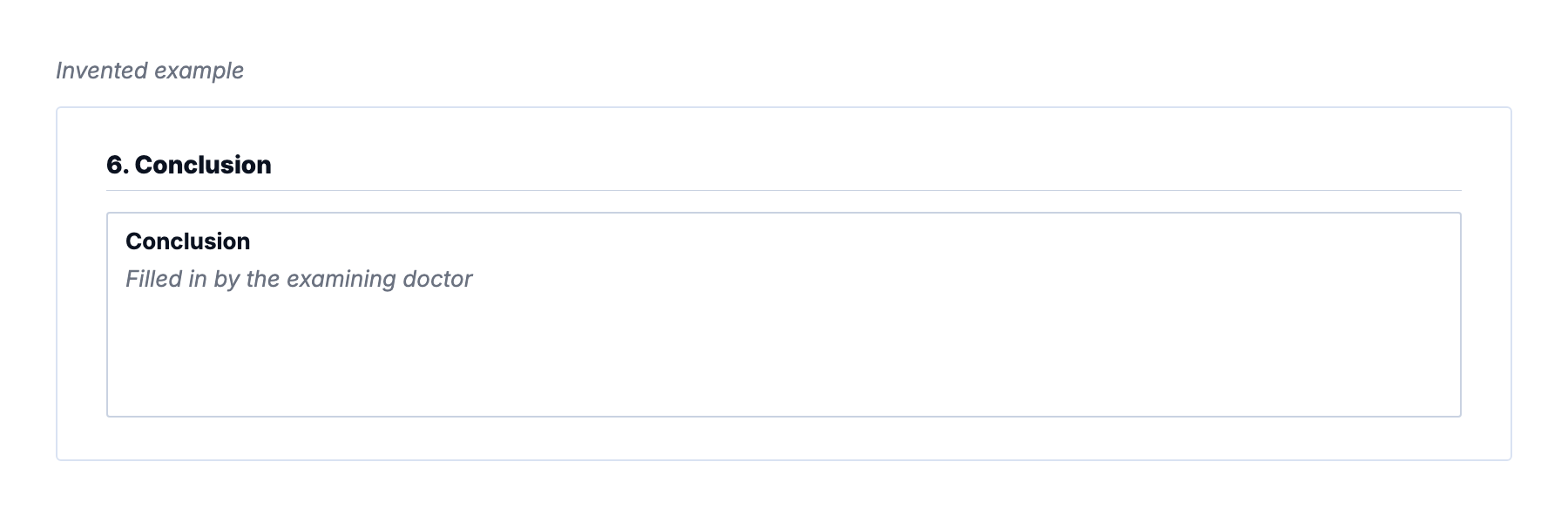
6. Conclusion
The conclusion comes from the examining doctor, based on all examination results. This article shows only where the section sits and who fills it in.
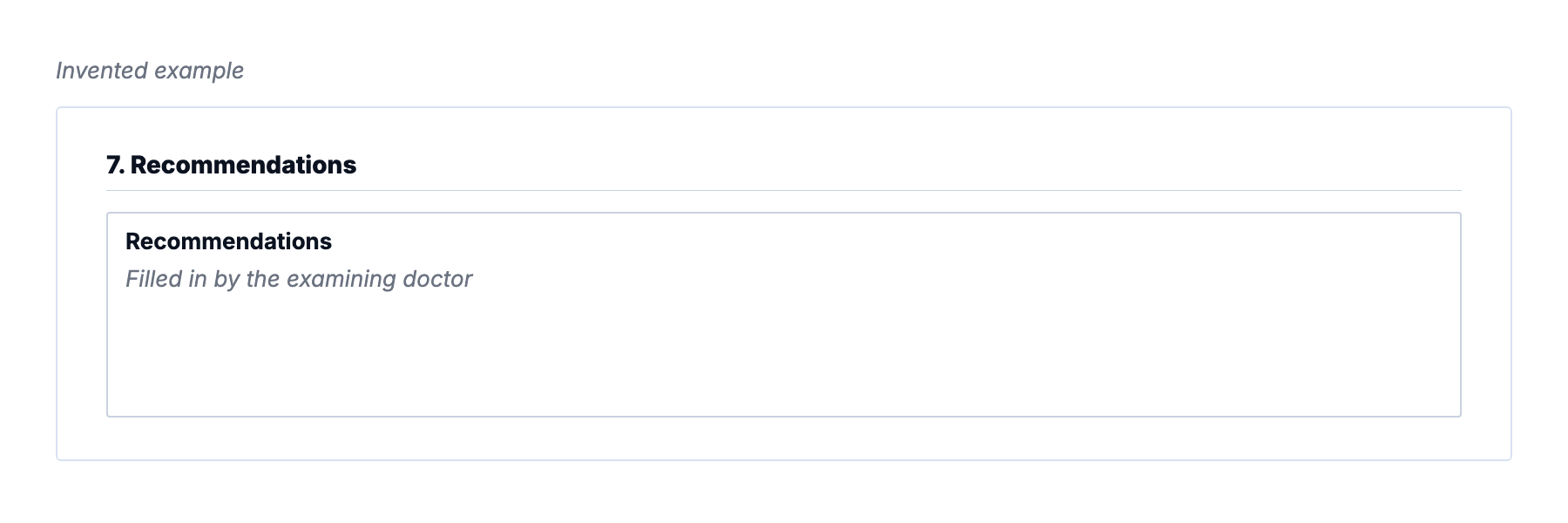
7. Recommendations
The examining doctor also fills in the recommendations. When a periodic check finds a health issue, the company has follow-up duties. The article what employers must do when a periodic MCU finds health issues covers them.
8. Fitness for work
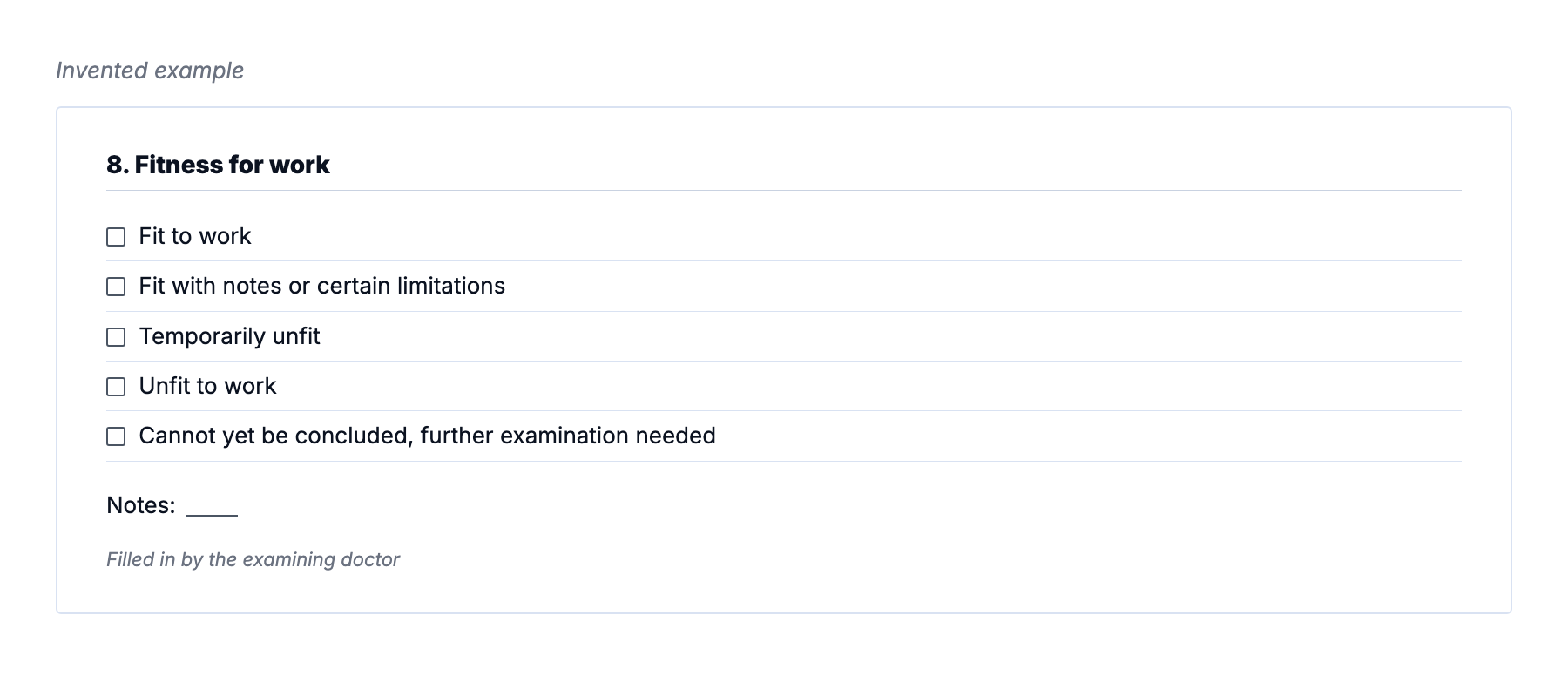
The IDKI form has a fitness-for-work section with five options.
- Fit to work.
- Fit with notes or certain limitations.
- Temporarily unfit.
- Unfit to work.
- Cannot yet be concluded, further examination needed.
The examining doctor ticks one option with the participant's current or intended job in mind, and can add notes. This article does not cover what each option means or its criteria. For a given participant, the examining doctor explains its meaning.
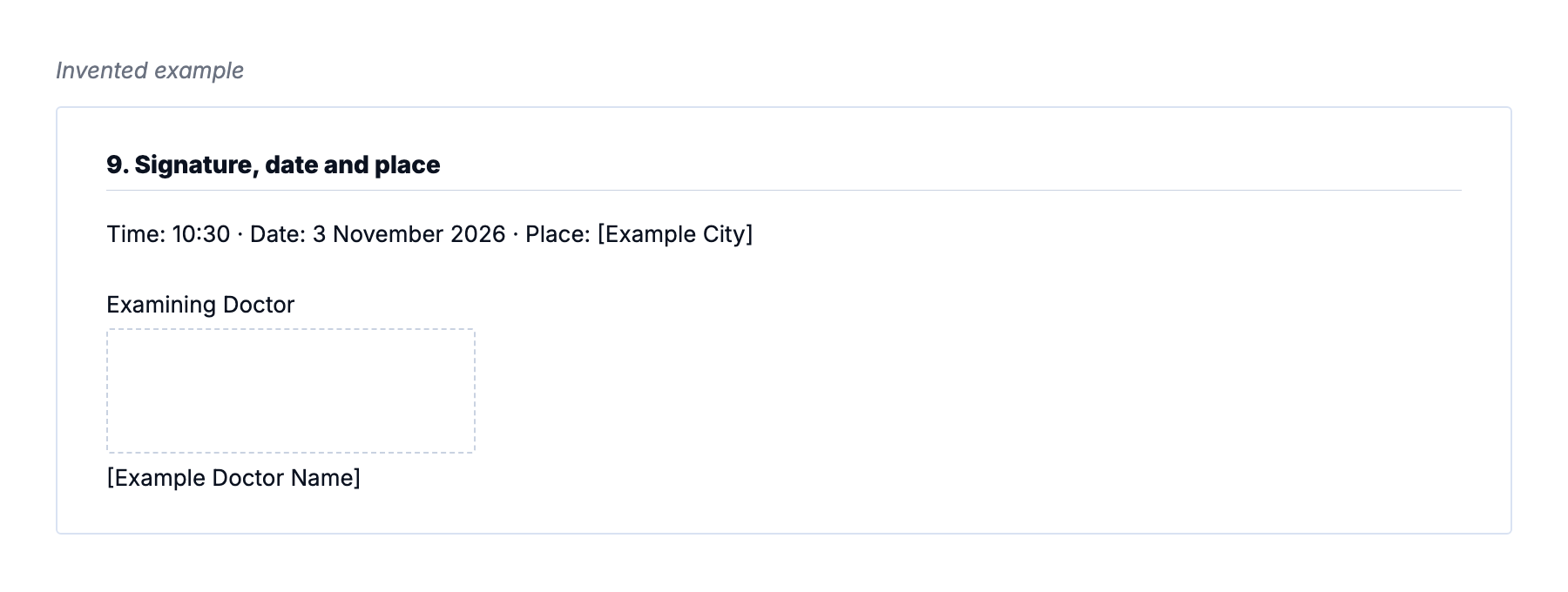
9. Signature, date and place
The report closes with the examining doctor's signature, with the time, date and place of the examination. Under Article 1(d) of Manpower Ministry Regulation 02/1980, the examining doctor is a qualified doctor appointed by the employer. An attached laboratory report has its own signatory. The article from lab records to signed MCU reports sets out the rules at each step.
What the employee and the company receive
Each person's results are confidential personal health information and part of the medical record. Disclosure to anyone else follows medical record rules and is limited to what is needed. Detailed individual results stay with the health facility and go to the participant. The company receives aggregate patterns without identifying anyone. Except in an emergency, individual information, such as from a pre-employment check, goes to the company only with the participant's written consent for that examination. It contains the fitness-for-work status and any work restrictions, without a diagnosis or test result values. The written agreement between the health facility and the company records the form of any document for the company, its recipient and its send date.
Prepare, review and release
Start with source-data checks, then prepare the draft for physician verification and sign-off. Release also needs the institution’s recipient boundaries and delivery responsibilities to be clear; generating a PDF alone does not complete that process.
Read the full explanationCorrect the source, recheck the affected output, and return the revised report to review before reissuing it. The institution also needs to handle copies already shared; changing a field is not the same as closing the correction loop.
Read the full explanationConclusion
An employee MCU report is easier to read when every section is present, filled in by the right person, and clearly signed. For many participants at once, see an example MCU results summary.
FAQ
What does an employee MCU report contain?
A complete employee medical check-up (MCU) report covers identity and type of check, health history, physical examination, laboratory results and supporting tests. It ends with the conclusion, recommendations, fitness for work and the examining doctor's signature.
Who signs an employee MCU report?
The examining doctor signs the MCU report, while authorised laboratory staff sign any attached laboratory report.
Does a regulation set the layout of an MCU report?
Regulation 02/1980 sets the types and scope of checks, not the report layout. The layout in this article follows the IDKI examination form, a professional association guideline.
Sources
- Minister of Manpower and Transmigration Regulation No. PER-02/MEN/1980, JDIH Kemnaker: Article 1, Article 2(1) and (3), Article 3(3) and Article 6(4). General rule for worker health checks.
- Minister of Health Regulation No. 43 of 2013, Annex Chapter IX B.3: content of laboratory results reports. General rule for clinical laboratories.
- Law No. 17 of 2023 on Health, Article 301, and Government Regulation No. 28 of 2024, Articles 783, 788 and 790: confidential personal health information, medical record content and its disclosure. General rule.
- Indonesian Association of Occupational Health Doctors (IDKI), Formulir Pemeriksaan Kesehatan Tenaga Kerja (2024): report sections and fitness-for-work options. Professional association guideline, not a regulation.